
C212 sentences, about 7 min
Hear each sentence and type it back word for word. Correct letters turn green as you type.
Ciao a tutti e bentornati sul mio canale. Come state? Spero che stiate tutti benissimo, ma soprattutto spero che siate pronti per imparare nuovi aggettivi,
Hello everyone and welcome back to my channel. How are you? I hope you're all doing great, but above all, I hope you're ready to learn new adjectives
per espandere il vostro vocabolario. Cominciamo subito. Metto la presentazione sullo schermo, così potete leggere anche voi. Se avete bisogno dei sottotitoli attivateli perché ci sono. Allora,
to expand your vocabulary. Let's get started. I'll put the presentation on the screen so you can read along. If you need subtitles, turn them on because they're there. So,
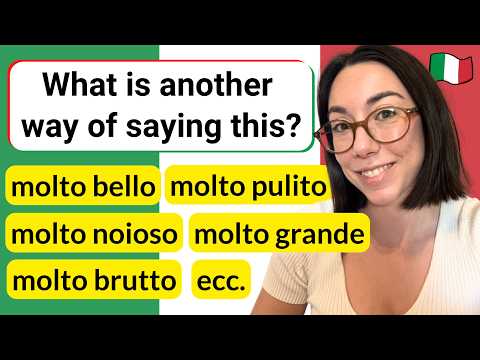
oggi vediamo insieme alcuni aggettivi ei. significa che sono aggettivi con significato pieno, quindi non servono avverbi come molto, tanto, eccetera, perché l'aggettivo ha già un
today we're going to look at some adjectives together. ei. means they're adjectives with a full meaning, so you don't need adverbs like molto, tanto, etc., because the adjective already has a
significato pieno. Iniziamo subito con la prima coppia di aggettivi. Oggi lavoriamo un po' anche sui sinonimi e i contrari. Chi ha seguito la lezione sul superlativo sa che
full meaning. Let's start right away with the first pair of adjectives. Today we'll also work a little on synonyms and antonyms. Anyone who followed the lesson on the superlative knows that
per aumentare il significato di un aggettivo possiamo usare l'avverbio, la parola molto, quindi posso dire molto buono, molto cattivo, posso anche dire buonissimo, cattivissimo.
to enhance the meaning of an adjective, we can use the adverb, the word molto, so I can say molto buono, molto cattivo, I can also say buonissimo, cattivissimo.
e il significato è lo stesso. Ci sono però degli aggettivi che significano molto buono, buonissimo, molto cattivo, cattivissimo, senza l'uso di molto e senza l'uso del suffisso perché
And the meaning is the same. However, there are adjectives that mean very good, very good, very bad, very bad, without the use of molto or the suffix because
sono aggettivi che hanno un significato pieno. Per esempio, questo risotto è squisito. È squisito. Il
they are adjectives that have a full meaning. For example, this risotto is exquisite. It's delicious. The
contrario è questo risotto è disgustoso. Questi due aggettivi sono usati per descrivere un cibo
opposite is this risotto is disgusting. These two adjectives are used to describe a food
o una bevanda, comunque qualcosa che mangiamo. Va bene, andiamo avanti. Abbiamo di nuovo buono e cattivo, però qui cambia il significato con il significato di qualità. Quindi, per esempio,
or a drink, or in any case, something we eat. Okay, let's move on. We have good and bad again , but here the meaning changes to quality. So, for example,
la tua ricerca è molto buona, è buonissima, è ottima, di qualità, quindi il lavoro che tu hai svolto è di qualità. è ottimo. Il contrario è la tua ricerca è pessima in termini di qualità.
your research is very good, it's very good, it's excellent, of quality, so the work you did is of quality. It's excellent. The opposite is your research is terrible in terms of quality.
Andiamo avanti e vediamo la terza coppia di aggettivi. Grande e piccolo. Allora, possiamo dire questa piscina è molto grande, questa piscina è grandissima. Questa piscina
Let's move on and look at the third pair of adjectives. Big and small. So, we can say this pool is very big, this pool is very large. This pool
è gigante. Il contrario è Ah, ho sbagliato, ho dimenticato di scrivere l'esempio giusto. Vabbè,
is gigantic. The opposite is Ah, I made a mistake, I forgot to write the correct example. Okay,