
C212 sentences, about 7 min
Hear each sentence and type it back word for word. Correct letters turn green as you type.
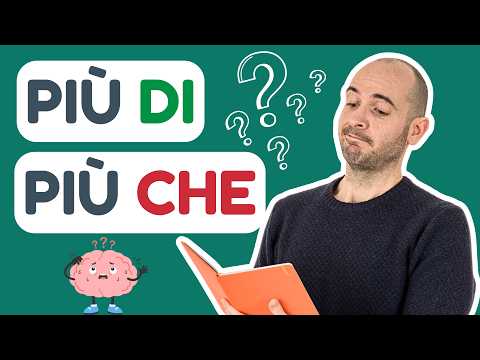
Allora, esistono diverse spiegazioni più o meno complicate su questo fenomeno.
So, there are various more or less complicated explanations for this phenomenon.
Qualcuno dice che si usa 'che' quando nessuno dei due termini di paragone è soggetto della frase.
Some say that 'che' is used when neither of the two terms being compared is the subject of the sentence.
Nella frase "in frigo tengo sempre più birra che vino", il soggetto sono io, non la birra o il vino. Poi esistono spiegazioni più complicate, ma non è questa la sede per presentarle.
In the sentence "in the fridge I always keep more beer than wine," the subject is me, not the beer or the wine. Then there are more complicated explanations, but this isn't the place to present them.
Abbiamo visto il comparativo di maggioranza con 'più di' o 'più che', ma abbiamo anche un comparativo di minoranza, che è il contrario, diciamo. Il comparativo di minoranza indica
We've seen the greater-than comparative with 'più di' or 'più che', but we also have a less-than comparative, which is the opposite, so to speak. The comparative of less than indicates
un termine di paragone con una qualità presente in misura inferiore rispetto all'altro termine di paragone. E in questo caso sostituiamo 'più' con 'meno'. Io sono decisamente meno pragmatico
a term of comparison with a quality present to a lesser extent than the other term of comparison. And in this case, we replace 'more' with 'less.' I'm decidedly less pragmatic.
di Giulia. È vero, è una caratteristica che invidio molto a Giulia. Meno pragmatico di Giulia.
Giulia's. It's true, it's a trait I greatly envy Giulia. Less pragmatic than Giulia.
Fa meno freddo fuori che in casa. Le regole sull'uso di 'di', di di 'di', e di 'che' sono le stesse. Eh, qui usiamo 'che' perché abbiamo una preposizione "in casa".
It's less cold outside than inside. The rules for using 'di', 'di di', and 'che' are the same. Well, here we use 'che' because we have a preposition "in casa."
Studiare la grammatica è meno stimolante che ascoltare un podcast che più verbo.
Studying grammar is less stimulating than listening to a podcast that uses a verb.
E poi abbiamo il comparativo di uguaglianza che ti presento per completezza. Mh, abbiamo il primo termine di paragone introdotto da 'così' o da 'tanto' e il secondo da 'come' oppure 'tanto quanto'. Oggi sono tanto stanco quanto ieri.
And then we have the comparative of equality, which I'll introduce to you for completeness. Well, we have the first comparative term introduced by 'così' or 'tanto' and the second by 'come' or 'tanto quanto'. Today I'm as tired as yesterday.
Tanto stanco quanto ieri in misura uguale. Mh. Francesco è tanto bravo quanto intelligente o semplicemente Francesco è bravo quanto intelligente? Modestamente, ogni tanto
As tired as yesterday in equal measure. Hmm. Is Francesco as good as he is intelligent , or is Francesco simply as good as he is intelligent? Modestly, allow me to speak well of myself every now and then
concedimi di parlare bene di me stesso. Bene, oggi abbiamo visto la differenza tra l'uso di 'di' e di 'che' nella formazione dei comparativi, e abbiamo visto in modo più approfondito
. Well, today we've seen the difference between using 'di' and 'che' in forming comparatives, and we've looked at
il comparativo di maggioranza. Ti ricordo che per chiarire tutti i tuoi dubbi puoi scrivere un commento qui sotto nel video e scaricare il documento PDF con l'esercizio
the greater-than-average comparative in more depth. I remind you that to clarify any doubts you may have, you can leave a comment below the video and download the PDF document with the exercise,